
What Makes a School Fundraiser Easy for Families to Support?
When a fundraiser underperforms, the instinct is to assume families didn’t care. In our experience, that’s rarely the case. Most families want to support their school. What varies is how easy the fundraiser makes it for them to act on that intention. A campaign that takes two minutes to understand and participate in will almost always feel different to families than one that requires deciphering instructions, remembering paper forms, or rearranging a workday. Here’s what actually makes participation easy, based on the questions and patterns we see across thousands of campaigns.
A Clear Goal Families Can Picture
“Support our school” is abstract. “We’re raising funds for new playground equipment” is concrete. Families respond to knowing what their participation accomplishes, and a specific, visible goal also gives them something natural to say when sharing the fundraiser with others. The clearer the purpose, the easier the ask.
Instructions That Fit in One Sentence
If participating requires a paragraph of explanation, participation may drop. The easiest campaigns can be explained in a single line: “Here’s our link, shop anytime in the next two weeks, orders ship to your door.” Every additional step, from finding a form, writing a check, remembering a deadline tied to a folder in a backpack, adds a place where busy families can fall out of the process.
Online Access on a Phone
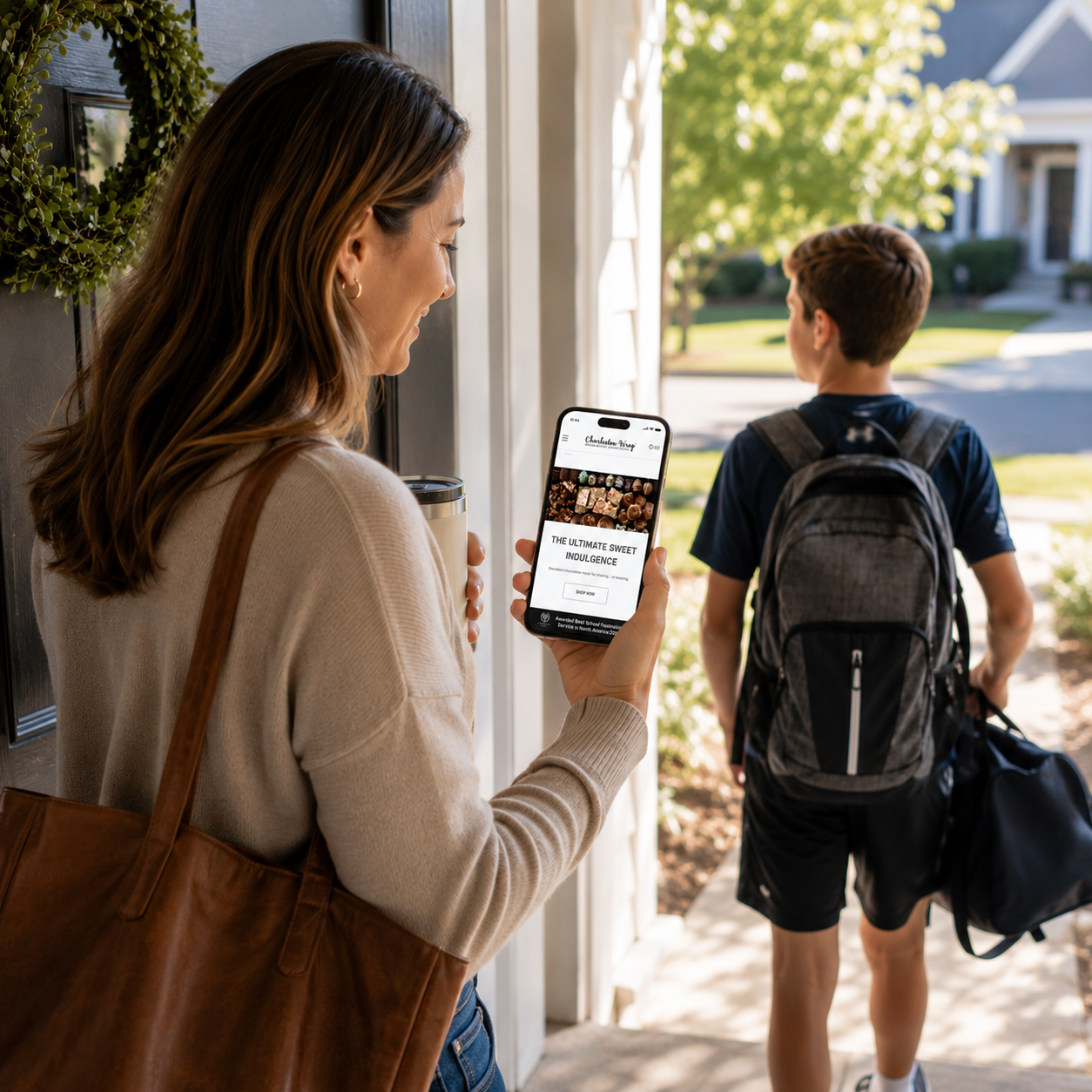
Most parents will encounter the fundraiser on their phone, among other things. A campaign they can open, browse, and complete in that moment is one they can actually finish. One that requires sitting down at a computer, or waiting until they’re home, may compete with everything else that happens before then.
This is also where easy school fundraisers differ most visibly from traditional formats: the entire experience happens wherever the supporter already is.
Simple Ways to Share Beyond the School
Some of the most willing supporters aren’t at the school at all. Grandparents, aunts and uncles, coworkers, and family friends often want to help, but only if reaching them is effortless. When each family has a personal link they can text or post in seconds, the extended circle becomes part of the campaign. When sharing requires physically handing someone a catalog, it usually doesn’t happen. At Charleston Wrap, this is exactly why our Participant App exists; one of the most common things sponsors tell us afterward is how many orders came from supporters in other states.
Something for Different Kinds of Supporters
Supporters arrive with different budgets and different motivations. Some want a small, simple way to contribute. Others are happy to do real shopping if the products interest them. Campaigns that offer variety, in categories and in price points, give both kinds of supporters a comfortable way in. Our own store spans everyday items through personalized gifts for this reason, but the principle applies to any program: one product at one price serves one kind of supporter.
Timing That Respects the Family Calendar
The same fundraiser can land very differently in early September than in mid-December. Campaigns launched when families are settled but not yet overloaded, early in the school year, or in spring ahead of gifting occasions, tend to feel easier to engage with. A defined, shortish campaign window helps too: families act when there’s a clear start and end, and a two-week frame keeps the fundraiser from becoming background noise.
Communication Families Actually See
A single announcement is easy to miss. A kickoff message, a mid-campaign reminder, and a final-days note, sent through channels families already read, keep the fundraiser visible without nagging. The schools that communicate in this rhythm consistently reach more of their families than those relying on one flyer.
Delivery That Doesn’t Create a Second Job
The last step matters as much as the first. If supporting the fundraiser ends with a trip to school during a pickup window, some families will quietly opt out at the start. When orders arrive at the supporter’s own door, the entire experience stays inside their normal routine. Among all the PTO fundraising ideas for schools a parent group might consider, the ones that remove this final logistical step are usually the ones families describe as effortless.
The Common Thread
Every item on this list reduces the distance between “I’d like to help” and “done.” That’s the whole design principle behind easy participation, and it’s a lens any PTO can apply when comparing programs: walk through the campaign as a busy family would, and count the steps.
FAQs
What’s the single biggest barrier to family participation?
Friction, in any form: unclear instructions, desktop-only ordering, paper forms, or required pickups. Most families who drop out of a fundraiser do so at one of these steps rather than deciding not to support the school.
How long should a school fundraiser run?
A defined window with a clear end date tends to work better than an open-ended campaign. Around two weeks is common, long enough for families to act, short enough to hold attention.
How can a PTO involve extended family who live far away?
Choose a program with online ordering and shareable links, and make sure orders can ship to the supporter’s own address. That combination is what turns out-of-town relatives into active participants.
Should we survey families before choosing a fundraiser?
The decision is best made by the leaders who know the financial needs and goal. Popular suggestions don’t always match the amount that needs to be raised, and families often can’t judge a program’s ease or reach until they’ve experienced it. Choose the program that fits the goal, then make participation simple.
Ready to Start a Successful Fundraiser?
Charleston Wrap makes it easy for schools, teams, churches, and community groups to raise more with high-quality products, online tools, and dedicated support.
Start Your Fundraiser ← Back to Blog